

The annual rise in the US consumer price index rose to a higher level than it is today in the early 1980s, long before the game exploded across the United States. When it comes to land-based GGR, and in fact its impact on online games, we’re really in an unknown territory, Paul Girvan writes.
A closer look at the data over the last decade reveals the magnitude of the change.
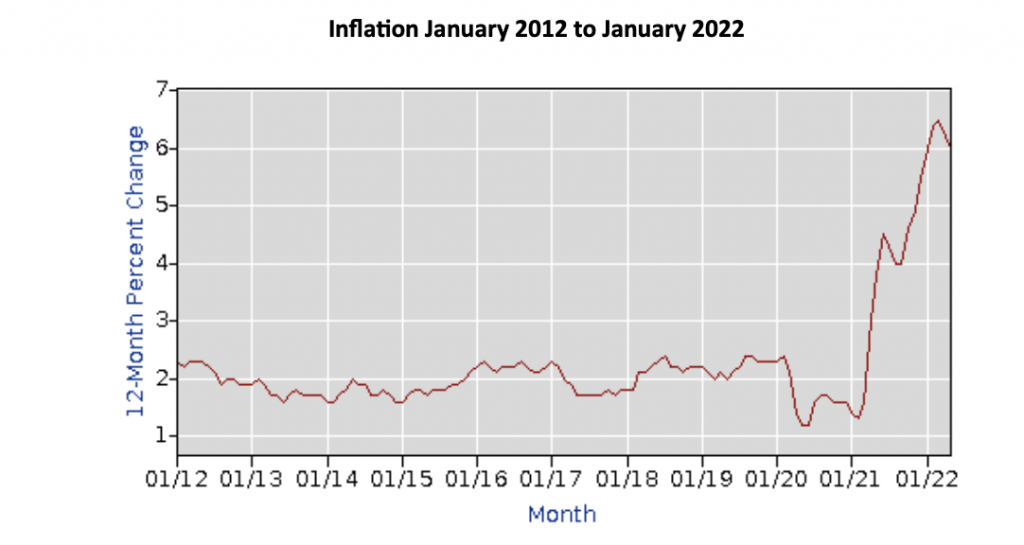
Between 2012 and 2021, inflation remained around 2%. It exceeded 6% by January 2022 and increased to 8.6% by May.
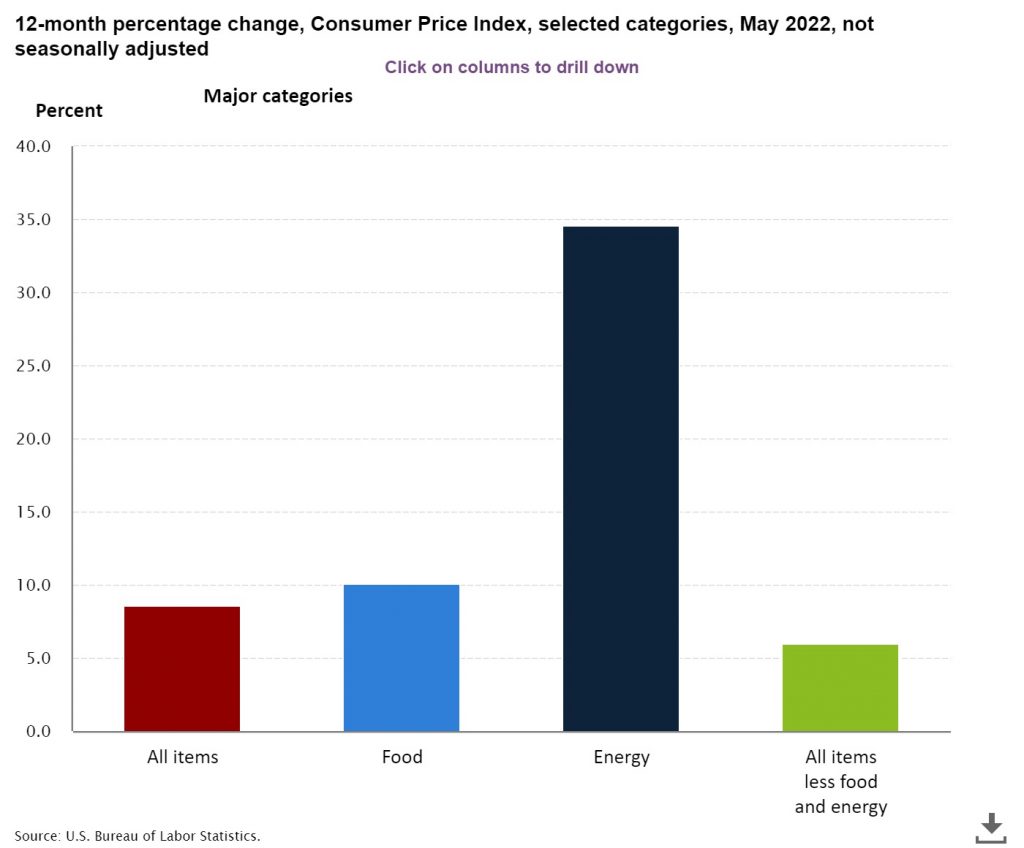
This is caused not only by the supply chain disruption caused by Covid’s pandemic, but also by Russia’s brutal invasion of Ukraine and the resulting energy market price disruption. The impact on consumer energy prices is clear.
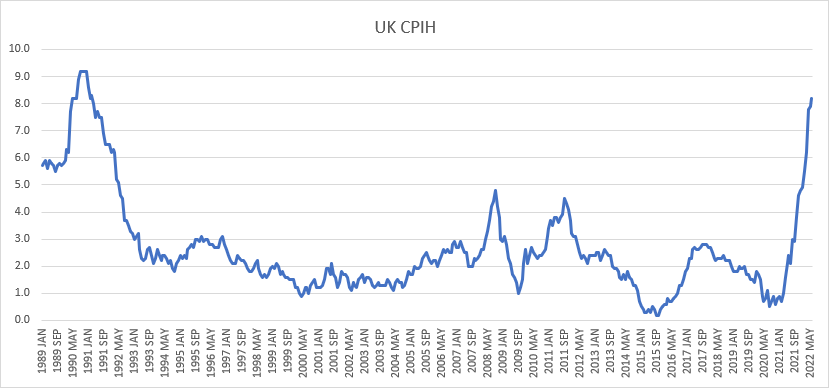
The story is no different in Britain.
After the worst Covid pandemic casinos were reopened nationwide and the remarkable progress of the GGR was realized, the GGR often eventually surpassed its pre-pandemic numbers. In general, optimism prevailed.
The progress of the expansion of sports betting continued unabated. Against the backdrop of both an impressive GGR recovery and margin improvements, game stocks have recovered significantly from the pandemic. These improvements were produced by the reduction of FTEs, and the elimination or reduction of low-margin equipment currently discovered may not have been as important as previously thought to drive GGR.
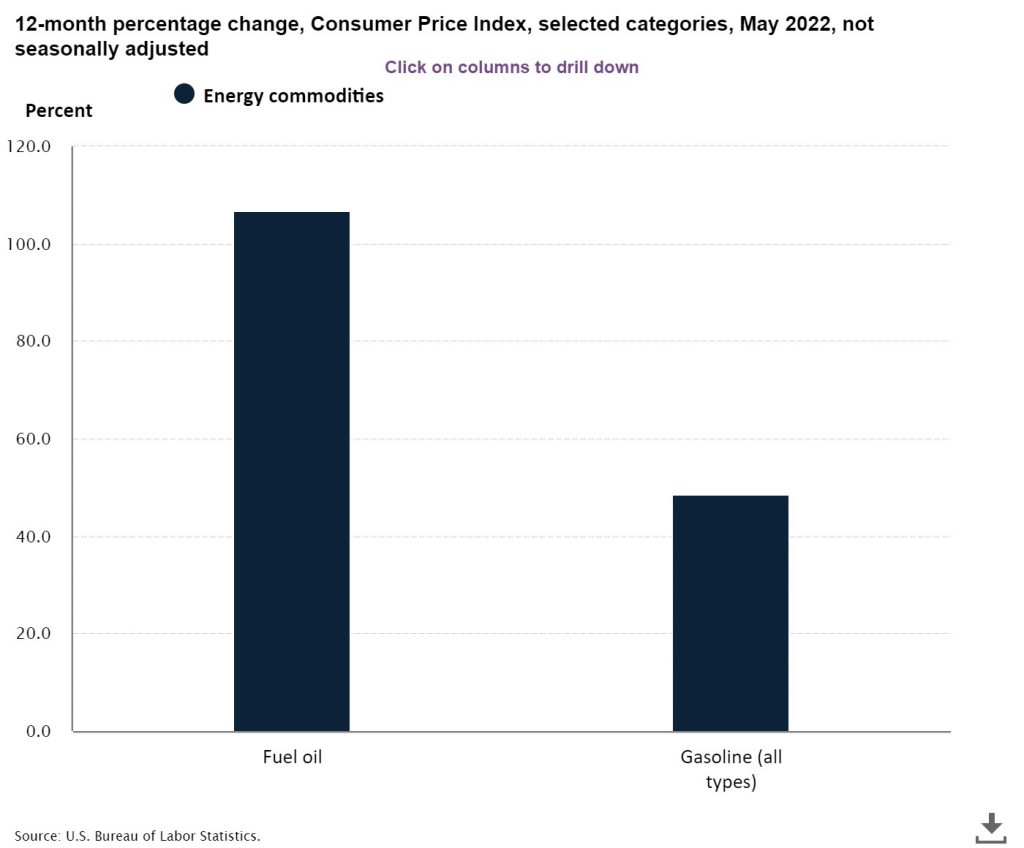
At least in the early post-pandemic world. This all happened despite supply chain disruptions, labor shortages and a gradual rise in inflation. But Russia’s invasion of Ukraine overturned this pattern of comfort. Inflation is now rampant as oil prices soar and gasoline prices soar across the United States.
For track and field games, the news doesn’t bother you anymore. Disposable income is declining as inflation increases.
Disposable income has consistently increased over the past few decades before declining between July 2021 and April 2022, and forecasts suggest that this trend will continue. This represents a sustained decline in disposable income for the first time since 2013.
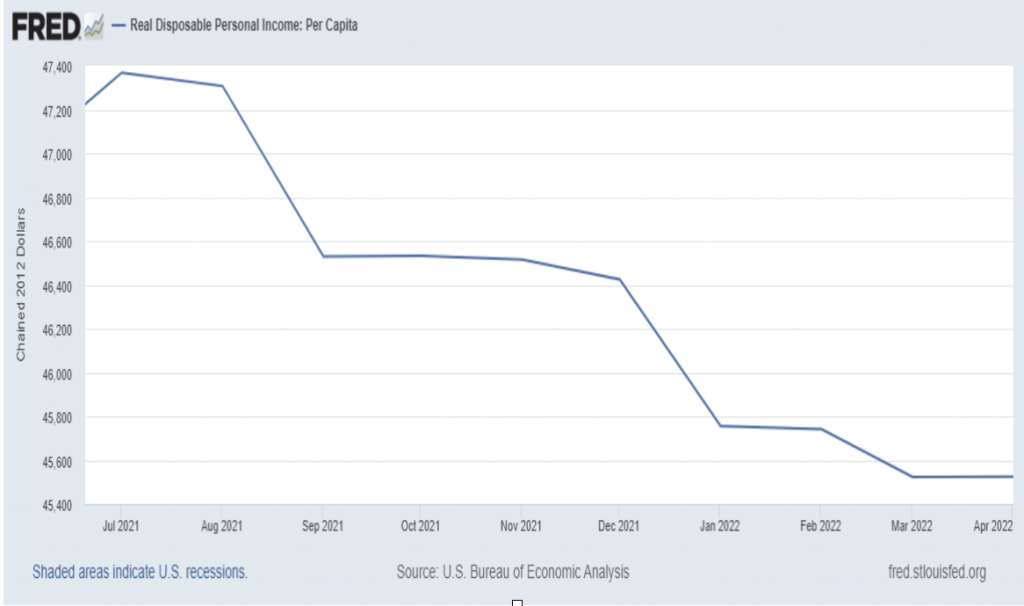
What that means is that both land and online betting and game GGR growth will slow in the coming months, but for land games the news is particularly bleak.
Casinos in the American region are drawn from a very large geographical area compared to the United Kingdom. Many gaming markets are drawn from catchments with more than two hours of drive time. As petrol prices double, more and more US casino visitors will choose not to travel.
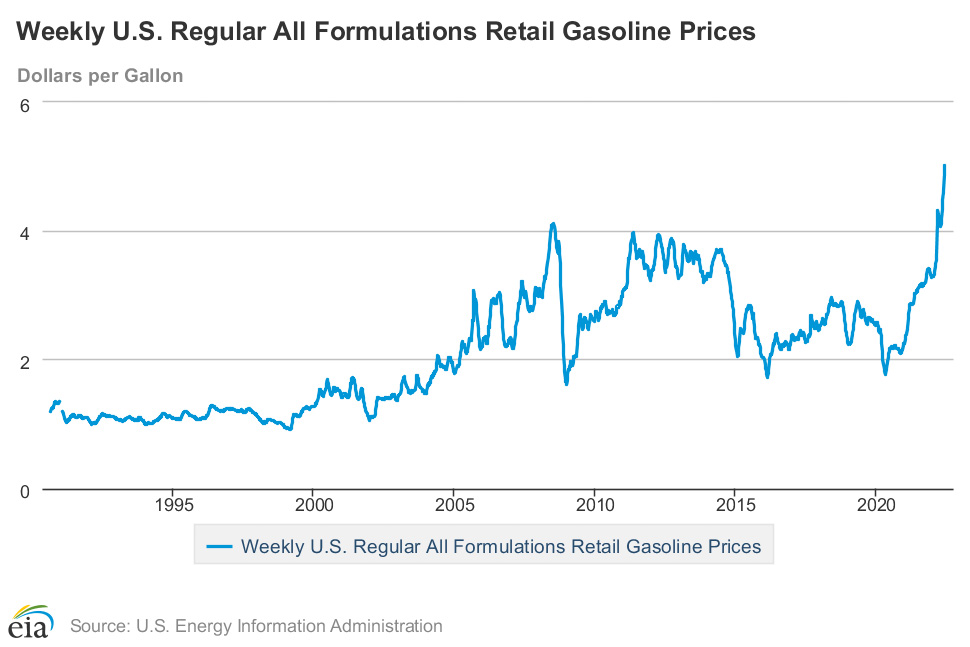
The impact can be small for some casinos, which are located in major densely populated areas that attract the majority of customers. The impact can be significant for other companies that are far from the core market. What appeared to be unabated for the past two decades, coupled with an overall increase in inflation and a decline in land-based GGR growth in disposable income, is now moving towards an absolute decline. It may be.
We are already beginning to see signs of this early warning. Derek Stevens, owner of three properties in downtown Las Vegas, said in a recent CNBC article that the amount of cash withdrawn from casino ATMs is declining. Downtown Las Vegas, unlike Strip properties, relies heavily on the drive-in California market, which is directly impacted by rising gasoline prices. For regional casinos that rely heavily on day drive-in customers, the impact can be even greater.
The warning sign has already appeared in the May GGR results. Of the 18 commercial gaming states, May’s GGR increased by 8 and decreased by 10 compared to the previous year.
The most important of these are Connecticut (-11%), Indiana (-11%), Louisiana (-9%), Mississippi (-8%), New Mexico (-5%), and Iowa (-5%). %)was. Connecticut, where two tribal casinos rely heavily on the drive-in market from New York City (more than 100 miles away) and Boston (75 miles away), saw a 11% year-on-year decrease in GGR per month Was seen in May.
These properties can be “coal mine canaries”. Early figures from June suggest that the decline continues, perhaps expanding and accelerating.
The American Gaming Association reported record three-month earnings ending in May 2022.
However, the warning sign is flashing. “Slot GGR was $ 2.94 billion, down 0.1% year-on-year. Table game GGR was up 11% to $ 873.9 million. Sports betting GGR was up 78% year-on-year to $ 487.5 million. Reaching the dollar, gambling GGR increased 31% to $ 406.4 million, “AGA said in a June earnings update.
Slots, which account for 77% of the total GGR of land casinos, decreased slightly from April to May. Despite the increase in table games, overall land GGR increased by only 1.5% from the previous month.
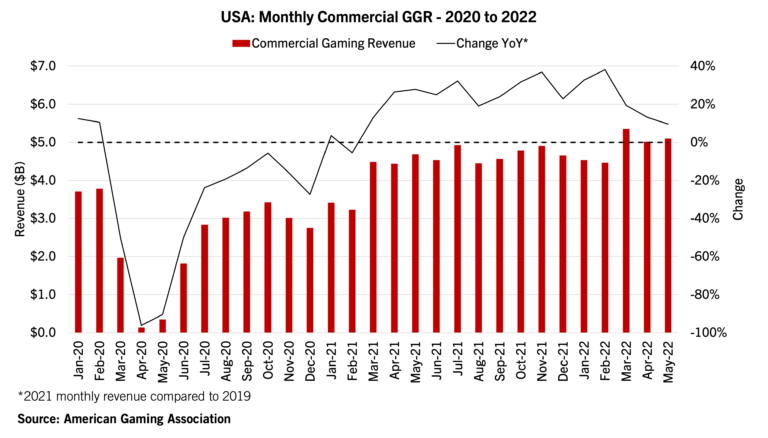
Despite the focus of sports betting and igaming, land-based GGRs account for more than 70% of total US game revenue.
iGaming shrank 2.4% in May, while sports betting increased 5.1%. Given the fluctuating sports calendar, the emergence and maturity of new markets, and the unique position of sports betting in the spirit of the United States, it is false to draw conclusions from the growth of national sports betting in a particular month. It should also be recognized that sports betting accounts for only 7-8% of the total US GGR.
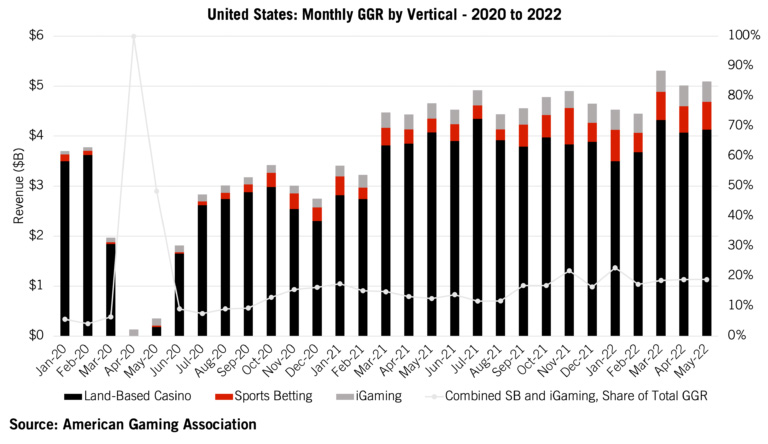
The old saying, “The US casino market is recession-resistant,” has long been criticized. As a result, the sharp inflation exacerbated by soaring gasoline prices can lead to a decline in commercial stock prices, as the Panther fears the effects of inflationary pressures.
For example, Caesars Entertainment’s share price fell 57% between January 3rd and June 24th this year. During the same period, Barry’s fell 46%, while Penn National Gaming’s and MGM Resorts shares fell 44%.
The S & P 500, on the other hand, has fallen by only 20% over the same period. For tribal casinos, these threats to GGR represent not only a decline in value, but also the threat of existence to tribal well-being and the direct impact on tribal services that individual tribal members feel personally. increase.
As gamers turn to computers rather than cars to access game options, imagining rising gas prices and declining game travel on land can theoretically be seen as a boon. However, a significant decline in disposable income and inflation of various necessities will put more pressure on GGR in this sector as well.
Have you already seen the impact on your gaming revenue? It’s still early to assess impact with high confidence, but early numbers from the four major states of Igaming suggest that we are.
The decline in igaming revenue for Michigan, Pennsylvania, New Jersey, and Connecticut from December 2021 to June 2022 is outlined in the chart below.
Changes in Gaming Revenue: March-June 2022
| March-June 2022 | |
| Pennsylvania | -12.9% |
| Michigan | -7.7% |
| New jersey | -5.3% |
| Connecticut | -11.4% |
| total | -8.6% |
Between March and June 2022, game revenues in each state declined. Pennsylvania stands out with a 12.9% decline during this period, while Connecticut recorded a 11.4% decline.
The sum of these four states shows a 8.6% decrease in image revenue between March and June.
Again, it’s too early to be decisive, but this decline should be taken into account against the consistent month-on-month revenue growth of the previous period.
Some of this fluctuation may be related to the mature gaming market and seasonality, but nonetheless, this weakness can serve as an early warning sign. The next quarter of revenue data will be decisive.
If these declines continue from month to month, a consistent pattern has been established.

Paul Girvan He is the CEO of PKC Gaming & Leisure Consultancy. Since being developed beyond Atlantic City and Las Vegas, he has been involved in the US gaming industry, conducting project-specific state-wide analysis of government, tribal, and commercial casino operators. Girvan has conducted numerous national and state-level analyzes of igaming and its legislative developments.He is also the annual author ICE365 Tribal Game Report..


